The Silent Profit Killer in Crane Hire
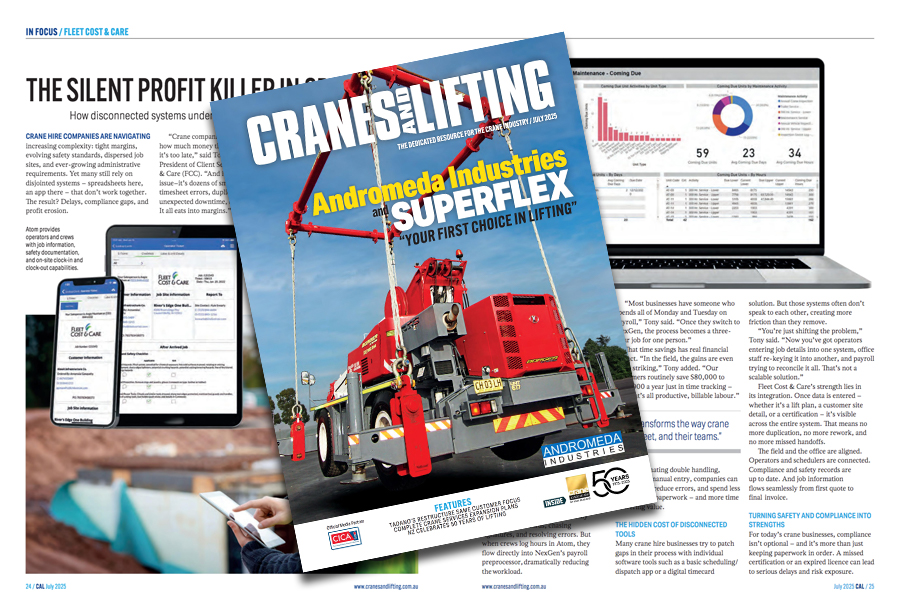
Originally published in Cranes & Lifting Magazine
How Disconnected Systems Undermine Growth (And What to Do About It)
Crane hire companies are navigating increasing complexity: tight margins, evolving safety standards, dispersed job sites, and ever-growing administrative requirements. Yet many still rely on disjointed systems—spreadsheets here, an app there—that don’t work together. The result? Delays, compliance gaps, and profit erosion.
“Crane companies often don’t realise how much money they’re losing until it’s too late,” says Tony Ashdown, Vice President of Client Services at Fleet Cost & Care (FCC). “And it’s rarely a single issue—it’s dozens of small breakdowns: timesheet errors, duplicated data entry, unexpected downtime, delays in payroll. It all eats into margins.”
The solution isn’t to bolt on another tool. It’s to unify operations with a system designed for the specific demands of the crane industry—one that connects the field with the office and ensures everyone’s working from the same page.
FCC’s integrated platform does just that. It doesn’t just digitise paperwork—it transforms the way crane businesses manage their work, their fleet, and their teams.
From the Office to the Site: One System for All
At the core of FCC’s platform are NexGen and Atom—two powerful solutions that work in tandem to bring visibility and control to every part of the operation. NexGen is the command centre in the office, managing quoting, scheduling, maintenance, invoicing, and compliance. Atom is its mobile counterpart, built for use in the field.
“NexGen is mission control,” says Tony. “Everything runs through it—from job creation to payroll processing. You can see your people, your equipment, and your financials in real time.”
In the field, Atom ensures operators and crews have what they need at their fingertips—whether it’s the day’s job information, safety documentation, or the ability to clock in and out on-site.
One of the most immediate wins is in payroll. Many businesses spend an entire day—or more—manually processing timecards, chasing signatures, and resolving errors. But when crews log hours in Atom, they flow directly into NexGen’s payroll preprocessor, dramatically reducing the workload.
“Most businesses have someone who spends all of Monday and Tuesday on payroll,” Tony explains. “Once they switch to NexGen, the process becomes a three-hour job for one person.”
That time savings has real financial impact.
“In the field, the gains are even more striking,” Tony adds. “Our customers routinely save $80,000 to $100,000 a year just in time tracking—and that’s all productive, billable labour.”
By eliminating double handling, delays, and manual entry, companies can move faster, reduce errors, and spend less time chasing paperwork—and more time delivering value.
The Hidden Cost of Disconnected Tools
Many crane hire businesses try to patch gaps in their process with individual software tools—like a basic scheduling/dispatch app or a digital timecard solution. But those systems often don’t speak to each other, creating more friction than they remove.
“You’re just shifting the problem,” Tony explains. “Now you’ve got operators entering job details into one system, office staff re-keying it into another, and payroll trying to reconcile it all. That’s not a scalable solution.”
FCC’s strength lies in its integration. Once data is entered—whether it’s a lift plan, a customer site detail, or a certification—it’s visible across the entire system. That means no more duplication, no more rework, and no more missed handoffs.
The field and the office are aligned. Operators and schedulers are connected. Compliance and safety records are up to date. And job information flows seamlessly from first quote to final invoice.
Turning Safety and Compliance into Strengths
For today’s crane businesses, compliance isn’t optional—and it’s more than just keeping paperwork in order. A missed certification or an expired licence can lead to serious delays and risk exposure.
“With Atom, every site certification, E-ticket, and operator licence is tracked and up to date. If something’s about to expire, the system flags it before it becomes a problem,” says Tony.
Maintenance is another major area of risk and opportunity. FCC’s platform helps teams stay ahead of services, using real-time data from the field and integrated telematics to automate reminders based on usage—not just calendar dates.
“You can line up maintenance with when a machine is due back at the depot,” Tony adds. “That’s how you avoid unnecessary downtime and keep machines rental-ready.”
Built for the Realities of Remote Work
FCC’s tools are designed for challenging environments where crane work often happens—shutdowns, regional sites, and locations where connectivity isn’t guaranteed.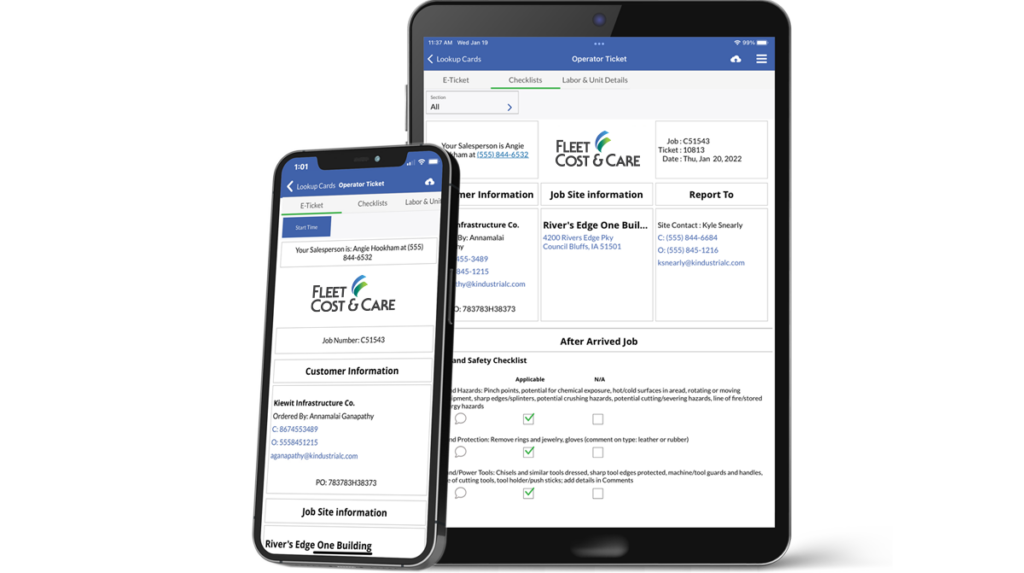
Atom’s offline capabilities ensure crews can still access job details, log hours, and complete documentation, even without mobile service. Once back online, the app syncs with NexGen—no manual work required.
“It’s built for the realities of this industry,” says Tony. “Whether you’re working in a refinery or out past the black stump, you don’t lose visibility or data.”
Looking Ahead: A Platform That Grows with You
Fleet Cost & Care continues to invest in technology that supports long-term growth. A new platform is currently in development, with a more flexible user experience that’s tailored to businesses of all sizes—from family-run operations to national fleets.
But FCC’s commitment extends beyond software. Their client services team works closely with each business to understand local labour rules, award requirements, and compliance standards—and tailor the platform accordingly.
“We’re not here to drop off some software and leave,” Tony says. “We’re here to build a partnership. Our job is to make sure our customers are ready for the future—before it hits them.”
Conclusion: Replacing Complexity with Clarity
The crane industry doesn’t stand still—and neither can its systems. Disconnected tools and manual processes create inefficiencies that grow quietly but cut deeply. Solving them takes more than digital paperwork. It takes a unified approach to field and fleet management.
With FCC’s ecosystem in place, crane hire businesses can operate with confidence—knowing their teams are connected, their compliance is sound, and their profits are protected.
“Fleet management shouldn’t be a drag on your business,” Tony says. “It should be your advantage.”
Ready to unify your operations?
Request a demo to see how Fleet Cost & Care can help your business eliminate the inefficiencies that are holding you back.